The Difference Between UVA, UVB, UVC Rays and their applications
Sep 30, 2024
Types of UV Rays
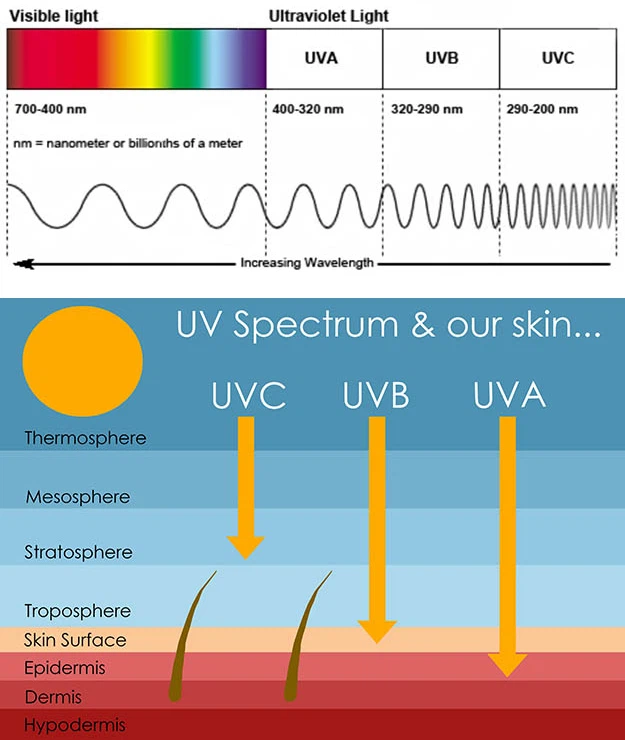
- UVA – The most common UV ray from the sun and most dangerous, UVA can penetrate the skin down to the middle layer.
- UVB – A shorter wavelength than UVA that can only penetrate the skin to the top layer. The earth's ozone layer stops some UVB rays from reaching the surface. Treated glass also can stop UVB rays.
- UVC – The ozone layer stops all UVC rays from the sun. Therefore, the only exposure humans get to UVC is from artificial sources such as lasers or welding torches.

The Difference Between UVA, UVB, and UVC Rays
UVA rays have the longest wavelengths, followed by UVB, and UVC rays which have the shortest wavelengths. While UVA and UVB rays are transmitted through the atmosphere, all UVC and some UVB rays are absorbed by the Earth's ozone layer. So, most of the UV rays you come in contact with are UVA with a small amount of UVB.
The UV region covers the wavelength range 100-400 nm and is divided into three bands:
- UVA (315-400 nm)
- UVB (280-315 nm)
- UVC (100-280 nm)
Short-wavelength UVC is the most damaging type of UV radiation. However, it is completely filtered by the atmosphere and does not reach the earth's surface.
Medium-wavelength UVB is very biologically active but cannot penetrate beyond the superficial skin layers. It is responsible for delayed tanning and burning; in addition to these short-term effects it enhances skin ageing and significantly promotes the development of skin cancer. Most solar UVB is filtered by the atmosphere.
The relatively long-wavelength UVA accounts for approximately 95 per cent of the UV radiation reaching the Earth's surface. It can penetrate into the deeper layers of the skin and is responsible for the immediate tanning effect. Furthermore, it also contributes to skin ageing and wrinkling. For a long time it was thought that UVA could not cause any lasting damage. Recent studies strongly suggest that it may also enhance the development of skin cancers.
The application of UVA, UVB and UVC rays
UV rays can be found across industries in many applications. With uses of ultraviolet radiation, including personal and industrial, the potential for UV applications is ever-expanding. Ultraviolet wavelengths are capable of simple operations like illumination, but they also offer complex functions in light therapy and germicidal applications. Various uses of UV rays can be used for:
Usage of Ultraviolet Rays In Health and Medicine
- Sunbeds: UV radiation is used in sunbeds to stimulate the production of melanin, creating a cosmetic tan. However, excessive use of sunbeds can increase the risk of skin cancer and premature skin aging due to the damaging effects of UV radiation.
- Skin Treatment: In controlled doses, UV light is used to treat various skin conditions, including psoriasis, eczema, and vitiligo. This treatment, known as phototherapy, involves exposing the skin to specific wavelengths of UV light under medical supervision.
- Vitamin D Synthesis: UVB radiation from the sun plays a crucial role in the natural synthesis of vitamin D in the skin, which is essential for bone health and immune function.

- Water Sterilization: UV light is effective in purifying water by destroying bacteria, viruses, and other pathogens, making it safe for drinking without the use of chemicals.
- Surface and Air Disinfection: UV lamps are used in hospitals, laboratories, and HVAC systems to sterilize equipment, surfaces, and air, reducing the spread of infectious diseases.
- Food Preservation: UV light can extend the shelf life of food by inactivating microorganisms on the surface of fruits, vegetables, and other food products.

Usage of Ultraviolet Rays In Security and Forensics
- Counterfeit Detection: UV light reveals security features in banknotes, passports, and other important documents, aiding in the identification of counterfeits.
- Forensic Analysis: Crime scene investigators use UV light to detect bodily fluids, fibers, and other evidence not visible under normal lighting conditions.
Usage of Ultraviolet Rays In Industrial and Scientific Applications
- Fluorescent Tubes: UV light excites mercury vapor in fluorescent tubes, causing the coating inside the tube to glow and produce visible light, illuminating homes and businesses efficiently.
- Material Testing and Inspection: UV light can reveal cracks, leaks, and material compositions in industrial products through fluorescence, aiding in quality control and research.
- Chemical Synthesis: UV radiation is used in the chemical industry to initiate photopolymerization, curing, and other reactions in the manufacture of plastics, coatings, and inks.

Usage of Ultraviolet Rays In Environmental Monitoring
- Ozone Layer Monitoring: Instruments that measure UV radiation from the sun are used to monitor the health of the Earth's ozone layer, which protects life by absorbing most of the sun's harmful UV radiation.
- Water Quality Testing: UV light helps in assessing water quality by detecting organic compounds and pollutants, providing data for environmental protection and water management efforts.
Usage of Ultraviolet Rays In Entertainment and Art
- Black Light Effects: UV light is used in art installations, nightclubs, and theaters to create glowing effects on materials and surfaces treated with fluorescent paints and materials, adding a unique visual dimension to artistic and entertainment venues.
Usage of Ultraviolet Rays In Photolithography in Electronics Manufacturing
- Semiconductor Fabrication: UV light plays a crucial role in photolithography, a process used in the manufacturing of semiconductor devices, where it is used to transfer microscopic patterns onto silicon wafers.