

TIDRO: Your leading UV supplier
Leading technology
We have advanced production technology and equipment, which can provide customers with high-quality UV sterilizers
Diversified products
Our UV sterilizer cover various powers&sizes which can meet the needs of a variety of systems and projects
Safe and reliable
We pay attention to the safety management and production environment of the enterprise to ensure the quality and safety of products
24 HOURS SERVICE
We have a professional business team to solve various problems for you 24 hours a day, welcome OEM and ODM services.
-

Portable UV Sterilization Lamp UVC 86
What are UV light air purifiers? UV air purifiers are designed to use short-wave ultraviolet light (UV-C light) to inactivate airborne pathogens and microorganisms like mold, bacteria and viruses.
Add to Inquiry -
UV Lamp Portable Ultraviolet Sterilizer
Some UVC lamps can irritate the eyes and burn the skin, so you should always avoid direct eye contact with your lamp. UVC has also been implicated in polymer degradation, so it's best to keep it away
Add to Inquiry -
Portable UV C Light Sterilizer
UVC radiation is the highest energy portion of the UV radiation spectrum. UVC radiation from the sun does not reach the earth's surface because it is blocked by the ozone layer in the atmosphere.
Add to Inquiry -
Ultraviolet water purification is effective, environmentally friendly, reliable, quick, clean, safe, economical, and essentially trouble free. Learn more about ultraviolet water purification
Add to Inquiry -
UV Sterilization For Water Filter
Model: TDUV-220. Flow rate: 6/12/24/48GPM. Reactor dimension: 6/12/24/48GPM. In/outlet port: Male thread
Add to Inquiry -
4-1200W UV Water Sterilizer Purifier
Model: TDUV-220. Flow rate: 6/12/24/48GPM. Reactor dimension: 6/12/24/48GPM. In/outlet port: Male thread
Add to Inquiry -
Model: TDUV-4W. Flow rate/gpm: 0.3 gpm. Flow rate (L/H): 55. Material: 304ss
Add to Inquiry -
Whole House UV Water Sterilizer
Model: TDUV-4W. Flow rate/gpm: 0.3 gpm. Flow rate (L/H): 55. Material: 304ss
Add to Inquiry -
UV Water Sterilization Systems
Model: TDUV-330. Flow rate: 12/24/48/60GPM. Reactor dimension: 950*133mm. In/outlet port: 1½'' male
Add to Inquiry


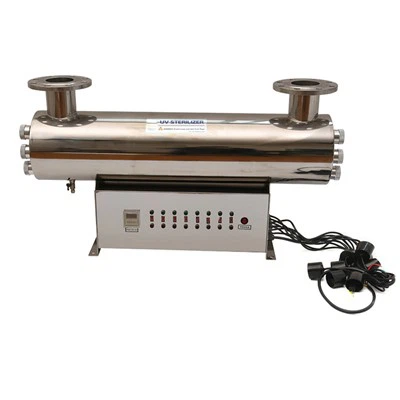

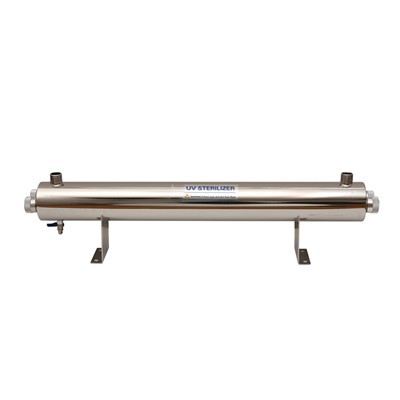


A UV sterilizer is simply a device that utilizes germicidal ultraviolet rays to eradicate viruses, bacteria, and other illness-causing microorganisms from raw water. Ultraviolet light sterilization is the most proficient water disinfection technology with a 99.9% impurity rejection score. Particularly, ultraviolet light is utilized in water treatment to target and destroy pathogens present in raw water.
Ultraviolet sterilization was first deployed as a water disinfection technology in the 1900s. However, chlorination was the preferred water treatment mechanism then and this harbored the adoption of ultraviolet sterilization. Recent technological advancements in ultraviolet radiation have nonetheless driven up the use of UV sterilization.
Unlike chlorination, UV sterilization does not alter the taste, smell, or concentration of the water given no chemicals are utilized in the process. The operational costs have significantly lessened and advancements on key equipment have elevated the effectiveness of UV sterilizers.
At present, UV sterilizers are widely utilized in homes, business enterprises, and industries. In Europe alone, there are over 2000 enormous UV sterilization systems supplying safe water to millions of individuals. UV sterilizers are particularly effective in eradicating microbial contaminants hence they are more suited for post-treating filtered water.
Typical UV sterilizers are made of four primary components. Each component plays a different but equally vital role in ensuring your UV sterilization system functions properly. Underneath, we explore the chief components of a UV sterilizer and their roles in water disinfection.

01
Ultraviolet lamp
The UV lamp is the primary component in ultraviolet sterilizers. UV lamps disinfect water by diffusing the germicidal wavelength. There are numerous types of ultraviolet lamps fitted on UV sterilization units.
- Standard UV
- Amalgam UV
- High output UV
02
Quartz sleeve
This is simply a glass tubing covering the UV lamp to shield it from the water. A quartz sleeve is characterized by its elongated and cylindrical shape.
03
Reactor chamber
The reactor chamber is a structure that houses the other components of a UV sterilizer i.e UV lamp, user interface and the quartz sleeve. Primarily, the reactor chamber is made of stainless steel and can have different sizes and shapes.
04
Control interface
The control interface is also known as the ballast. It is a command center from where you can modify the electrical output of the UV lamp. It contains automatic power on and off functions and essentially determines the UV rays’ intensity, ultimately influencing the system’s disinfection rate.
First, it is worth noting that UV sterilization does not eradicate microorganisms from contaminated water, it renders them inactive. Ultraviolet sterilization functions by targeting and annihilating the DNA cells of microorganisms present in contaminated water. Specifically, UV sterilizers inactivate microbial contaminants by destroying the nucleic acids found in the microorganisms’ DNA. The amount of time the water is exposed to UV light (exposure time) and the intensity of the wavelength, significantly influence the disinfection score of ultraviolet water sterilization units.
Regulatory bodies have set different thresholds for UV sterilizers’ exposure time but typically, the minimum exposure time in most regions is approximately 16,000 µwatt-sec/cm^2. At TIDRO, our ultraviolet light sterilizers are endowed with sufficient lamp intensities ranging from 30,000 to 50,000µwatt-sec/cm^2. Additionally, we attach warning alarms on our systems to alert users of depreciating lamp intensity.
Ultraviolet dosage is the chief determinant of the UV sterilizer’s pathogen inactivation rate. Higher doses enhance optimum inactivation of pathogens while lower doses result in low inactivation rates. When treating high-grade water, a UV sterilizer with a low-pressure mercury lamp can potentially inactivate disease-causing microorganisms at radiation doses ranging from 50-150 mJ/cm2.


The application of ultraviolet sterilization systems in water treatment has massively boosted efforts geared at preventing waterborne diseases. The use of household UV sterilizers and the incorporation of UV disinfection in municipal water provide billions of people across the world with safe, uncontaminated drinking water. Underneath, we expound on the various advantages of UV sterilizers.
High disinfection rates
Ultraviolet sterilization units are without a doubt the most effective disinfection tool in water treatment. Under the appropriate light intensity and UV dosage, UV sterilizers can inactivate virtually all microorganisms present in raw water. The average disinfection rate of ultraviolet sterilizers is 99%.
With adequate customizations, UV sterilizers can effectively destroy Giardia and Cryptosporidium cysts. For optimal operation of UV sterilizers, it is necessary that the feed water meet the following specifications:
- Suspended solids: Below 10mg/L.
- Iron: 0.3 mg/L.
- Manganese: 0.05mg/L.
- PH: 6.5 to 9.5.
- Color: None.
- Water hardness: Below 7 GPG.
Easy to maintain
Operating and maintaining a UV sterilization system is very easy and straightforward. Adequate quality maintenance is mandatory for optimum disinfection. The structure housing the UV light lamps is easy and affordable to clean given you only need a solution with 0.15 sodium hydrosulfite. Alternatively, the cleaning can be done using citric acid. NEWater’s UV systems have fitted wipers, which massively ease the cleaning process.
After servicing the plumbing unit, it is recommended that you sterilize the entire system using chemicals like chlorine. This eliminates the risk of having foreign contaminants alter your water sterilization process and results.
Additionally, the continuous use of UV lamps results in gradual depreciation in intensity levels. As a matter of fact, the light intensity might drop by 20% inside the 100 hours. However, they can maintain high intensities for the succeeding 1000 hours. Replacement of UV lamps is mandated once the intensity fails to meet the germicidal range. This is especially made easy by the presence of emission detectors, which alert you of the decreasing lamp intensity.
Does not alter the taste or smell of water.
Ultraviolet sterilizers treat water by inactivating the organic microbes in water. They do not utilize chemicals that may change the smell or taste of your drinking water. Similarly, UV sterilizers do not improve the taste or smell of your drinking water.
Minimal wastage of water.
UV sterilizers have no wastewater. Their working principle is founded on inactivating microorganisms meaning there is no emission of waste products. Furthermore, the process of ultraviolet disinfection hardly involves the use of chemicals thereby eliminating the possibility of waste generation.
Application fields of Ultraviolet sterilizers.
The application scales of ultraviolet sterilizers cut across all industries that necessitate high-quality purified water. Microbial contaminants in water are not only a nuisance to human health, they can negatively alter vital industrial processes and products.
To generate high-grade potable water suitable for human consumption as well as diverse industrial applications, UV sterilizers are incorporated as point-of-entry and point-of-use water treatment systems. Underneath, we explore the various industries utilizing UV sterilizers to generate microbial-free potable water.
Pharmaceutical firms.
The quality of water needed in various pharmaceutical applications is of the highest quality. This is because most pharmaceutical products are meant for human consumption and the intake of contaminated products could have adverse effects on human health. To attain the high-grade pharmaceutical water necessitated for delicate activities like drug formulation and dilution of solutions, pharmaceuticals utilize UV sterilizers to inactivate microbes found in ordinary tap water.
Households.
The World Health Organization and respective public health institutions have laid down requirements for safe drinking water. Point-of-entry UV sterilizers are pretty common in homes nowadays as families covet to combat waterborne illnesses. Households sourcing their drinking and cooking water from wells, rivers, or municipal supply systems can make certain they have safe drinking water by integrating UV sterilizers into the distribution system.
Wastewater reclamation.
With the prevalent water scarcity, various industries have incorporated wastewater treatment technologies to facilitate the reuse and recycling of wastewater. Effective wastewater treatment involves the use of several water treatment systems with UV sterilizers being deployed in tertiary treatment. Ideally, ultraviolet sterilizers are utilized to polish treated water from reverse osmosis, ultrafiltration, or ion exchange systems.
Food processing industries.
Water is an essential ingredient in most food products and is also the primary cleaning agent. However, ordinary tap water rarely qualifies for use in most food processing applications given it contains varying amounts of microorganisms. Therein, food-processing industries have adopted ultraviolet radiation systems to generate high-quality product water.
Laboratories.
Water with the slightest concentration of microbial, dissolved, and suspended contaminants can massively alter laboratory results. To ensure laboratory experiments are accurate, UV sterilizers are integrated into laboratory water treatment systems to mitigate the threat of microbial contamination.
Other applications of ultraviolet sterilizers include cosmetic manufacturing, marine water purification, and treatment of mining water.
Maintenance and replacements.
The UV lumps are subject to burnout and they do necessitate periodic replacements. Replacement costs of UV lumps vary significantly with low-pressure lumps commanding low prices compared to medium UV lumps. The average lifespan of UV lumps is one year but under great maintenance, they can last longer. Tidro’s UV lamps are designed to last longer and to continually disinfect water.
Additional charges pertaining to the maintenance of ultraviolet sterilizers relate to cleaning of the UV lamp housing. This is done using solutions containing 0.15 citric acid or sodium hydrosulfite, which is considerably inexpensive.
Types of UV sterilizers.
UV sterilizers are specialized to support different applications hence the existence of distinct devices with varying specifications. The two primary types of UV sterilizers manufactured by Tidro are:
● Industrial UV sterilizers.
● Commercial UV sterilizers.

Certifications

Our Factory

FAQ
Q: What does an UV sterilizer do?
Q: Does UV light really sanitize water?
Q: Is UV water safe to drink?
Q: How Long Does it Take UV Light to Destroy Bacteria?
We're professional UV sterilizer manufacturers and suppliers in China, specialized in providing high quality customized products. We warmly welcome you to buy or wholesale UV sterilizer at competitive price from our factory.
Ultraviolet Water Purifier, UV Room Disinfection, UVC Water Purifier