The Hidden Tax of Cheap UVC Lamps: How to Spot Counterfeits Before They Ruin Your Equipment
Apr 30, 2026
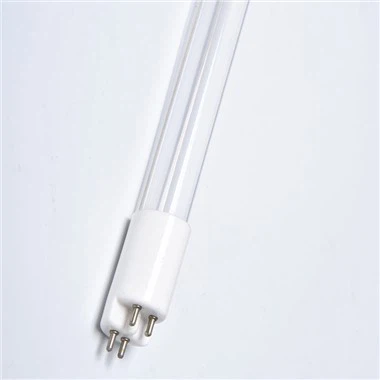
Let's be honest. If you put a premium UVC replacement lamp next to a budget counterfeit, 90% of buyers wouldn't spot the difference just by looking at them. They both have quartz tubes. They both have four pins. They both light up blue.
But here is the reality I see all the time in this industry: a client buys a batch of budget lamps to save a few bucks, only to find their ballasts burnt out three months later, or their water treatment tests failing because the UV intensity dropped off a cliff.
So many years of working experiences have taught me a lesson. The real difference isn't on the outside. It's hidden in the raw materials, the filament craftsmanship, and the internal electrical matching.
If you want to stop paying the "hidden tax" of low-end UV lamps, here is what you actually need to look for-before and after you turn them on.

1. The Visual Inspection: Ceramics, Wires, and Quartz Cleanliness
Before you even plug a lamp into your system, take a close look at the build quality. Cheap factories always cut corners on the materials you don't immediately notice.
The End Caps & Wires: Are the end caps made of high-voltage electrostatic ceramics? Are they using genuine high-temperature, high-voltage lead wires? Budget lamps often use cheap plastics or low-grade ceramics that crack under industrial heat.
The Quartz Wall: Hold the quartz tube up to the light and look closely at the inner wall. Is it perfectly clean, or do you see tiny impurities and dust? A dirty inner wall means a sloppy manufacturing environment, which will severely block UV transmission.

2. The "Heart" of the Lamp: Check the Electrodes
The electrodes dictate how many start-up cycles your lamp can actually handle.
Look at the coating: Premium lamps-especially the ones engineered to replace high-end Trojan or Xylem systems-have a thick, even layer of white electron powder on the filament. It ensures stable ignition. Counterfeits usually have a thin, flaky coating. Once that coating burns off, the lamp is dead.
Check the structure: Industrial-grade lamps use a triple-helix filament with heavy-duty supports. They are built to survive international shipping vibrations. Cheap alternatives usually rely on a flimsy double or single-helix design. One good shake, and they snap.

3. The Invisible Killer: Electrical Mismatch
This is where the real damage happens. You can't see the gas mixture inside the tube, but your ballast definitely feels it.
I can't count how many times clients have asked me why their systems are overheating. Usually, it comes down to Tube Voltage. Every high-quality lamp is built to strict electrical specs. If you measure a cheap counterfeit with a power meter, its operating voltage often deviates wildly from OEM standards. That mismatch forces your ballast to work overtime at abnormal frequencies, eventually burning it out.

4. Don't Guess, Measure It: The UV Energy Meter Test
True quartz glass transmits over 90% of 254nm UV light. But premium quartz is expensive, so low-end manufacturers often sneak in "soft glass" or high-hydroxyl quartz.
Sure, the lamp still looks blue when you turn it on, but blue light doesn't kill bacteria. Don't trust your eyes; trust a UV intensity meter. If you put two lamps of the exact same wattage side-by-side under the same conditions, the energy meter won't lie. A quality lamp will output high, stable UV energy and maintain over 85% of its germicidal power even after 9,000 hours. A fake will often lose half its intensity in the first 500 hours. You are basically paying for a blue nightlight.

5. Read the Black Ends
Every fluorescent-style lamp blackens at the end of its life. That's normal. What isn't normal is when it happens in a week or two.
If you see deep black rings forming near the pins shortly after installation, pull the lamp out. It's a massive red flag. It means the electrode coating is already degrading or there were organic impurities left inside the tube during that sloppy manufacturing process we talked about earlier.
The Bottom Line
Comparing unit prices on a spreadsheet is easy, but it's a dangerous game in the UV disinfection business. A counterfeit might look like a steal today, but frequent replacements and blown ballasts can easily triple your Total Cost of Ownership (TCO) by the end of the year.
My advice? Stop buying blind. Check the ceramic caps. Ask your supplier for specific Tube Voltage datasheets. Using a UV intensity meter. And most importantly, partner with a manufacturer who actually understands the electrical compatibility required for major industrial systems.
Shoot me an email if you're struggling with UV system maintenance, or if you just want someone to double-check if the replacement lamps you're buying are actually up to spec. Happy to help.
We have many years' experience in manufacturing OEM products for domestic and overseas customers. Furthermore, we have obtained support from internationally well-known companies and optoelectronic technology research institutes. position in the same trade in China.
Our address
No.52 Zhicun Industrial Zone, Chongfu Town, Tongxiang, Zhejiang, China
Phone Number