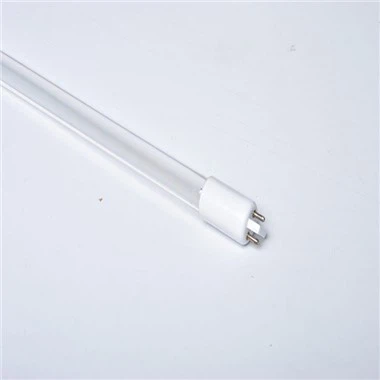
The Working Principle Of Anti-ultraviolet Lamp
Sep 08, 2021
Ultraviolet lamps are referred to as UV lamps. According to different wavebands, they are UV-A, UV-B, and UV-C, each with different purposes.
1. Low-pressure ultraviolet lamps, namely germicidal lamps, are mainly used for sterilization and disinfection. In addition, UV-B is also mainly used for ultraviolet inspection and medical treatment.
2. The strong ultraviolet high-pressure ultraviolet lamp tube is made of high-quality pure quartz tube, so that the ultraviolet can penetrate to a high degree and a large amount. Its arc length/lighting length can range from 5 cm to 300 cm, and the common power is per cm. 30W to 200W, ultra-high-power UV lamps generally operate at 200W per centimeter or more. The effective spectral range of the lamp is between 350-450nm and the main peak is 365nm. There are more than 700 varieties, and the power is from 100w-25kw.
The life of an ultraviolet lamp generally refers to the time it can maintain sufficient energy for operation. During this period, its energy gradually decays until it is below the acceptable range. In general, a standard UV lamp can emit enough UV energy for 800 hours.
UV curing is widely used in bamboo and wood flooring, furniture, decorative materials, printing, printed iron cans, plastic coating, signs, circuit boards, optical discs and other industries; UV lamps are also ideal for bonding and curing semiconductors, electronic components, liquid crystals, etc. light source.
The white anti-ultraviolet lamp tube can effectively inhibit the emission of ultraviolet light below 400nm, and is mostly used in lighting areas of electronic factories, archives, libraries and other occasions.
Yellow anti-ultraviolet lamps can effectively inhibit the emission of ultraviolet rays below 500nm, and are mostly used in the yellow light area of electronic factories, anti-exposure places and darkrooms.