

UV-C An Optimal HVAC Option in Health Care Applications
Jan 22, 2024
Few industries value pristine IAQ more than the health care sector
By Herb Woerpel
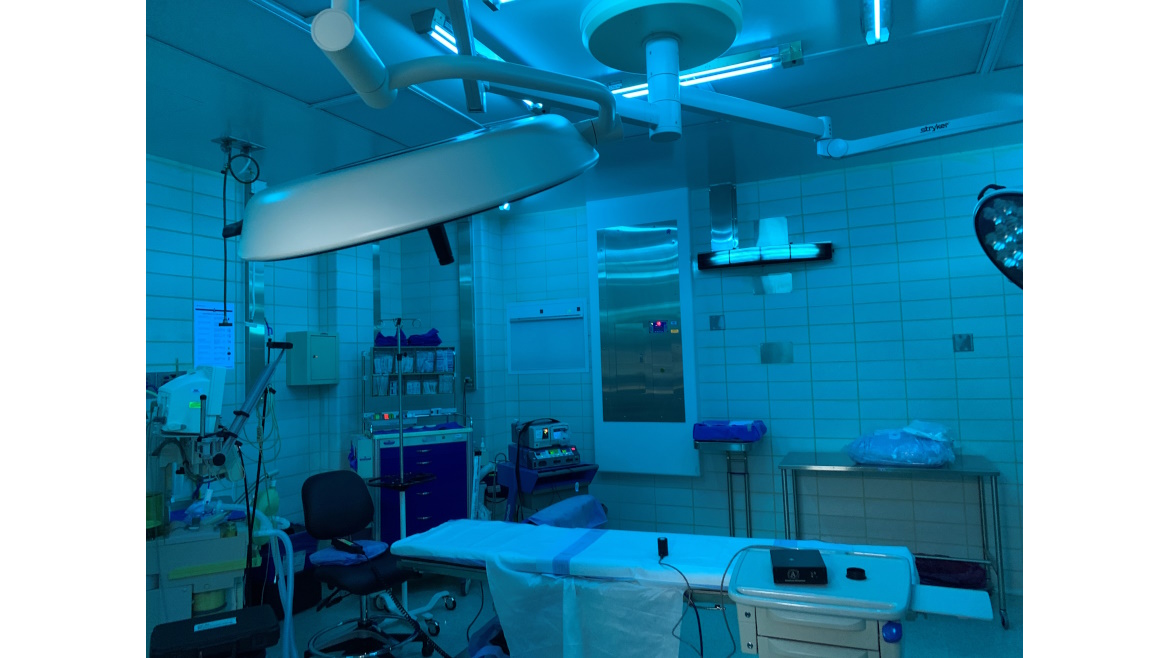
HEALTH AIR: Ultraviolet light (UV-C) is a powerful disinfectant with the proven ability to inactivate viruses, which is especially useful in health care applications. (Courtesy of American Ultraviolet)
December 20, 2023
The airborne transmission of infectious respiratory diseases was thrust into the mainstream thanks to the pandemic. Air was identified as a primary transporter of exhaled droplets, which transmit viral respiratory diseases, such as COVID-19, and suddenly, everyone was much more mindful of their indoor air quality.
As a result, more and more Americans became focused on keeping the air circulating within their homes and businesses as clean, safe, and healthy as possible.
This rings loudest in mission critical settings, such as the health care sector, where pristine indoor air quality (IAQ) directly affects patients, staff, and guests. In fact, it may be the difference between life and death.
Ultraviolet Germicidal Irradiation
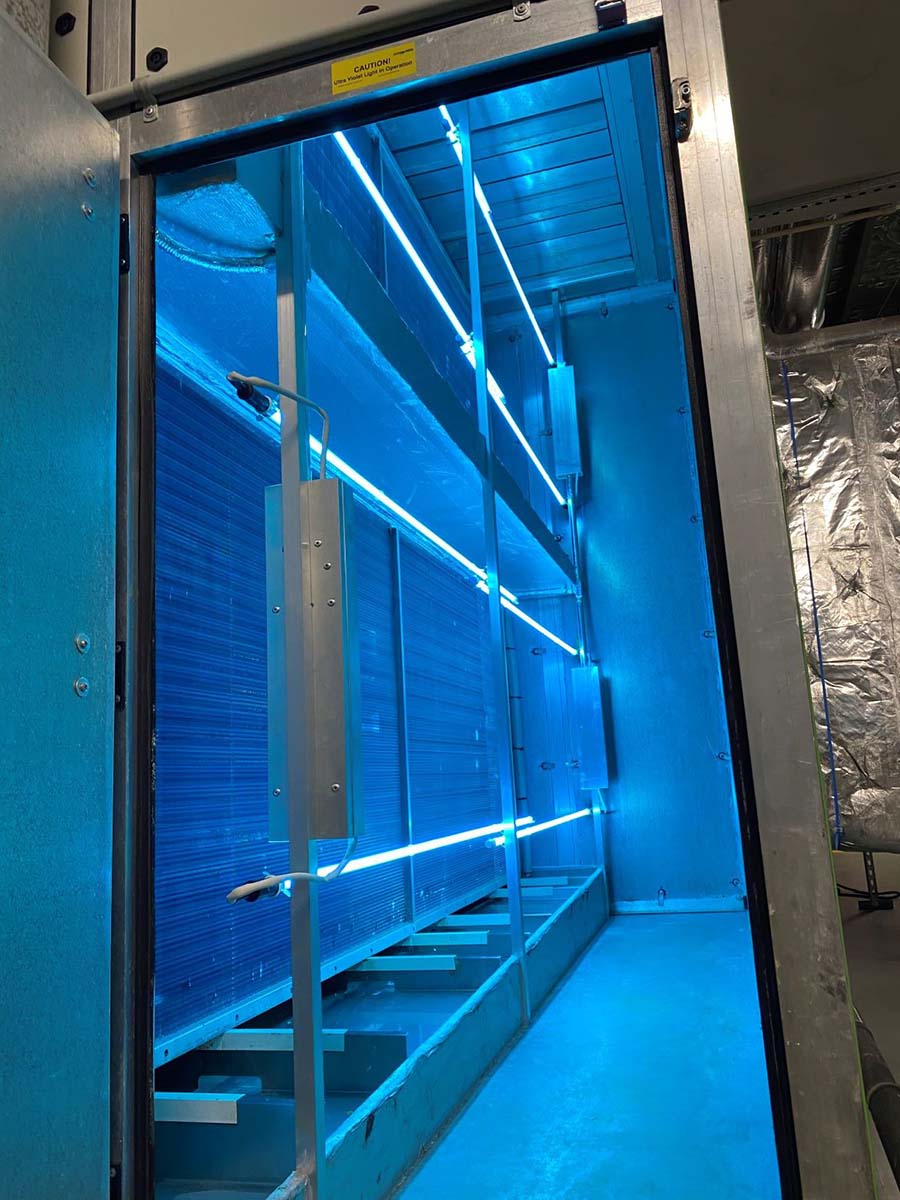
ELIMINATING MICROORGANISMS: By irradiating the contaminants at the source - the cooling coils and drains pans - Steril-Aire UVC delivers simultaneous cleaning of surface microorganisms and destruction of airborne microorganisms. (Courtesy of Steril Aire)
Ultraviolet light (UV-C) is a powerful disinfectant with the proven ability to inactivate viruses. This occurs when individual, energetic UV-C photons photochemically interact with RNA and DNA molecules in a virus or bacterium, rendering these microbes noninfectious, according to the Illuminating Engineering Society.
The use of UV-C in HVAC systems has proven to be an effective way to minimize the threat of volatile organic compounds (VOCs), small particles, and other airborne pathogens commonly found in health care environments.
"The ultraviolet germicidal wavelength can inactivate all known microorganisms, including bacteria, viruses, molds and other pathogens - even antibiotic-resistant superbugs," said Joe Kalman, director of sales, Steril-Aire. "ASHRAE states UV-C wavelengths can kill 90% or more of all microorganisms living on HVAC air ducts and evaporator coils, depending on UV-C intensity, length of exposure, UV lamp placement, and lamp life cycle."
Clean Coils and Disinfected Air
In HVAC applications, UV-C is most commonly used to both clean coils and disinfect airflow.
Over time, HVAC coils can inadvertently host mold, bacteria, and viruses, which can lead to microbial buildup on the heat exchange plates and drain pans. This accumulation can create resistance in the system's airflow, potentially leading to a decrease in thermal efficiency and a reduction in the equipment's life cycle.
Keeping a coil clean and free of growth may also reduce a compressor's runtime, decreasing the equipment's energy usage.
"Coil cleaning is especially key for maintaining improved temperature and humidity control, energy savings, and reduced HVAC system maintenance in both retrofit and new construction applications," said David Heidel, global sales director, airside, UltraViolet Devices Inc. (UVDI).
Coils continuously cleaned with UV-C emitters have been proven to keep HVAC systems operating at optimum thermal capacity, provided the lamps are replaced annually.
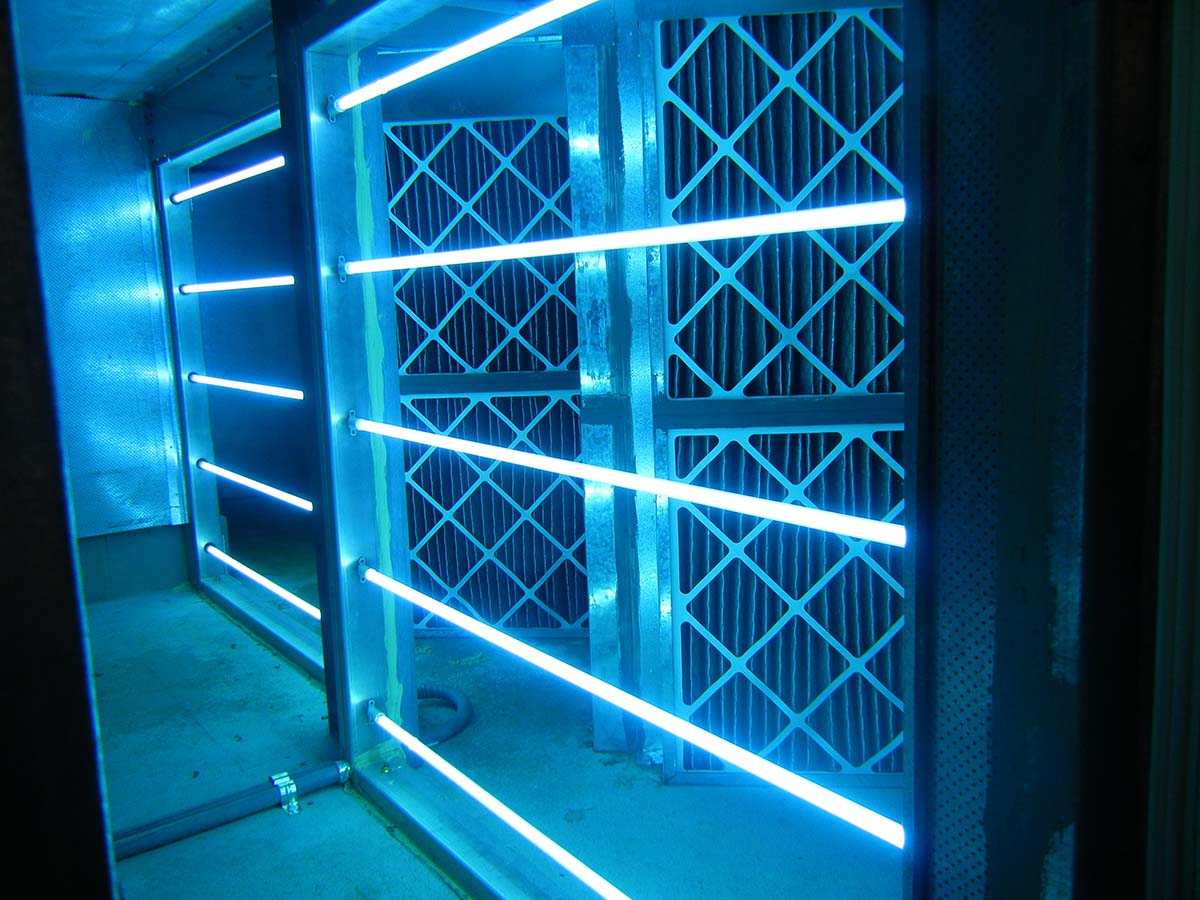
AIRSTREAM DISINFECTION: High-output Intensity Control Rack (ICR) Series fixtures from American Ultraviolet are designed specifically for HVAC airstream disinfection applications. (Courtesy of American Ultraviolet)
"High-output UV-C lights should be installed downstream of the HVAC cooling coil to degrade mold and other organisms that grow deep inside air-handler unit coils as well as airborne microbes that circulate through these systems to the occupied conditioned space," Kalman said. "This microbial buildup on HVAC cooling coils inhibits heat and humidity removal due to its 'insulating' properties that decrease heat transfer. Once this biofilm is removed, near original HVAC efficiency and airflow levels return."
In comparison to cleaning a coil, when disinfecting air, a higher-intensity array of lamps is necessary to achieve the target dose.
"When we look at the dynamic application of UV-C in pass-by air disinfection, exposure times drop to a second, or a fraction of a second, so we need to use a higher intensity array of lamps to achieve our target dose faster," said Sam Guzman, global director, health care division, American Ultraviolet. "We can also bring UV-C lamps local to the 'higher risk' areas. In crowded waiting rooms or common areas, wall- or ceiling-mounted upper air UV-C units make the most sense. We mount lamps in the upper portion of the room, above the occupants, and use a set of optical louvers to control the energy. These solutions have been instrumental in the fight against tuberculosis all around the world."
Proven Effective
UVDI's V-MAX technology utilizes 254nm UV-C lamps, each individually tested prior to assembly to verify 9,000 hours of lamp life in use. The technology has been installed in 1,500-plus facilities worldwide, including the Louisiana Health Sciences Center Medical Education Building in New Orleans and Advent Health in Orlando, Florida.
"Numerous health care facilities trust V-MAX technology because of its ability to disinfect airborne microorganisms, including coronavirus and Influenza," said Heidel. "V-MAX technology is proven to inactivate 99.99% of SARS-CoV-2 in a moving airstream at 500 feet per minute in independent BSL-3 laboratory testing."
Administrators at Richmond University Medical Center (RUMC) in Staten Island, New York, were hoping to improve their HCAHP scores by providing a better environment and better IAQ. About six years ago, they implemented a mobile UV-C disinfection program as part of that effort. The following year, RUMC was designated a referral site for Candida Auris, a new fungus that started showing up in health care sites.
"Candida Auris is a fungus that is difficult to get rid of with chemistries and manual cleaning only," said Guzman. The team at RUMC already had a plan in place, and by late 2019, as COVID-19 numbers started to rise, RUMC was able to maintain a safe environment for patients and staff. A strong UV-C program was a part of that."

ENERGY IMPROVEMENTS: After a successful UV-C pilot project, facility engineers began retrofitting one or two AHUs monthly with Steril Aire UV-C emitters and witnessed a dramatic improvement in energy performance. (Courtesy of Steril Aire)
When faced with a double-digit utility rate hike, hospital administrators at a Texas regional hospital searched for ways to save on its HVAC energy costs without compromising air quality or patient comfort. Seventeen of the hospital's air-handler units (AHUs), ranging from 20-80 tons, were nine-plus years old, and its four 465-ton chillers were running at 99% capacity. After a successful UV-C pilot project, facility engineers began retrofitting one or two AHUs monthly with Steril‑Aire UV-C emitters and witnessed a dramatic improvement in energy performance.
"After installing the UV-C fixtures, the delta between coil water temperature entering and exiting of one AHU increased by 11°F, indicating the coil became more efficient at removing heat from supply air," said Kalman. "This type of gain in heat-transfer efficiency helped drive a 20.64% decrease in electrical usage."
The increase in HVAC performance allowed engineers to move two of the hospital's four chillers offline, where they now serve in a backup capacity.
"The two remaining chillers currently operate at 80% capacity, helping to account for upward of $500,000 in annual energy savings. In all, 41 AHUs were retrofitted with Steril‑Aire high-output UVC, generating a 10-month return on investment."
Contracting Perks
While UV-C has proven beneficial to the health and well-being of health care inhabitants, it offers advantages to HVAC contractors as well.
"UV-C technology can give HVAC contractors a valuable source of recurring engagement with customers," said Heidel. "UV-C lamps require annual replacement at a relatively low cost. Both parties can benefit from setting a replacement schedule to ensure the ongoing effectiveness of the UV-C lamps and overall HVAC system."
Adding UV-C options to their quivers allows HVAC contractors to potentially improve their bottom lines on every service, said Kalman.
"There are only so many labor hours a day that can be billed, and contractors need a service they can sell," he said. "UV-C offers high-margin potential. When at a facility or residence, contractors can 'upsell' customers and feel good about the fact that the solution they're recommending can improve a customer's quality of life through improved IAQ and system performance."
If a contractor's true intention is to optimize customers' comfort and well-being, UV-C should certainly be an option they're offering, said Guzman.
"Studies have shown that better IAQ equates to better student performance, test grades, lower employee absenteeism, better productivity, and healthier patients," he said. "The installation is simple; the maintenance is minimal; the impact is dramatic; and, if done properly, the money savings can be substantial. By not having to clean coils every six months, combined with better efficiency, UV-C will provide a return on investment for contractors and customers that pays for itself in a short amount of time."


